
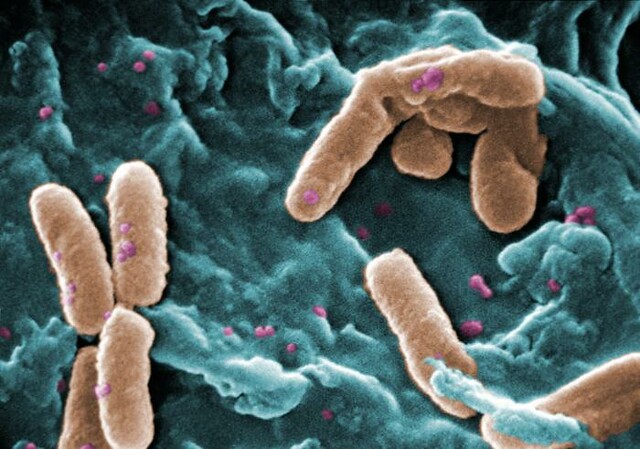

Drug-resistant infections are becoming one of the largest health threats globally. A United Nations advisory committee projects that these infections will push 24 million people into extreme poverty by 2030, and kill up to 10 million people each year by 2050. A bacterium called Pseudomonas aeruginosa causes about 1 in 10 hospital-acquired infections. It strikes hardest at people who are already vulnerable, such as patients in intensive care and people with weakened immune systems.
Researchers have identified 2 main reasons why P. aeruginosa is so hard to treat. First, it resists many antibiotics naturally and can develop new resistance during a single course of treatment. It also forms slimy protective layers called biofilms on catheters and ventilators, which shield it from drugs.
Scientists have found that P. aeruginosa can communicate via a chemical communication system called quorum sensing. They use this system to sense how many of their neighbours are present, and to switch on harmful genes together. It follows the popular saying, “there is power in numbers”. Scientists also know that a protein called MvfR is a core element of the quorum-sensing system. They’ve shown that removing MvfR reduces the bacterium’s ability to cause harm, which makes the protein an appealing drug target.
Researchers at the University of New South Wales recently argued that previous attempts to find the right compounds that block MvfR had 2 weaknesses. First, most studies used older DNA and protein data, ignoring the genetic differences present in bacteria isolated from patients today. Second, most screening studies stopped at predicting how well a compound binds to the protein of interest and blocks its activity, without checking whether the compound would behave like a real drug in the body.
To address these gaps, the researchers built their target protein from the genomes of recent clinical bacterial isolates and combined several layers of analysis to move beyond initial binding predictions alone. They downloaded whole-genome sequence data for clinical isolates of P. aeruginosa from the NCBI public archive and used an AI structure-prediction tool, called AlphaFold2, to build the 3D structure of the MvfR protein.
To determine which compounds could block their version of the MvfR protein and which would have the strongest interactions, the researchers used a chemical database to build 4 compound groups, labelled A-D, containing 7,199 compounds from 4 known antibiotic classes. They bound each compound to the MvfR protein using computer software, which ranked them based on their binding scores. Following this ranking, compound A1 was the compound in group A with the highest binding score, compound B1 was the compound in group B with the highest score, and so on.
Then, to test how well each compound would perform as an oral drug, the team used different computer programs to ask several questions designed to predict its safety for human consumption. For instance, would the human gut absorb the drug well? If so, it would be a good candidate for an oral drug. Would it penetrate the brain? If so, it would be a bad candidate. How well would it exit a person’s body once it completed its job? Would it remain bound to the protein if, for instance, the person was experiencing abnormal stress levels? Would it cause damaging side effects?
The researchers reported that many compounds in groups C and D violated one or more safety rules, whereas many compounds in groups A and B violated none. They concluded that A1 scored highest across all safety and stability criteria and, therefore, would be a good starting point for developing an effective MvfR blocker. They stated that their study was the first to identify this particular compound, and their findings can serve as a foundation for laboratory experiments to observe and confirm the compound’s performance in a living system, such as a cell line or an animal.
