
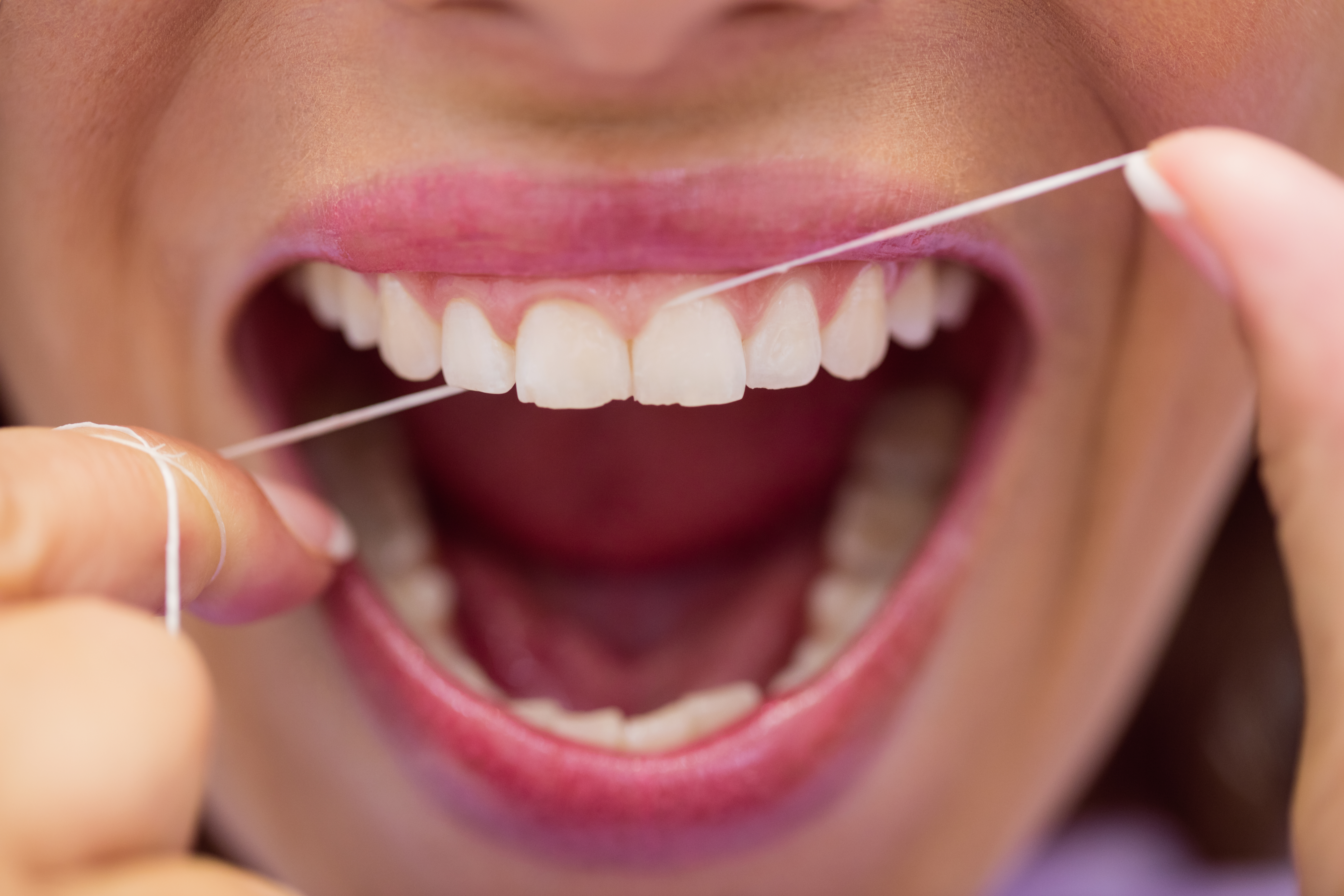

What if you could get a flu vaccine without any needles? Researchers recently discovered a solution to this question in the form of dental floss.
Doctors use vaccines to activate the body’s defenses or immune system and prevent infectious diseases. However, they administer these vaccines through needles, which can cause patients fear and pain. In addition, needle vaccinations don’t completely protect the inner surfaces of the body most vulnerable to infection, like the nose and mouth. These vulnerable areas are called mucosal surfaces. Therefore, scientists have turned to the mouth itself as a vaccination site.
Researchers have mainly focused on the tiny gap of tissue between the gums and teeth, known as the junctional epithelium or JE. The JE is considered “leaky,” meaning substances can easily move in and out of it. This leakiness makes it an ideal location for delivering immunizations to the body, including mucosal surfaces. However, the JE’s small size poses a challenge, prompting researchers to try alternative methods for delivering vaccines to this hard-to-reach area.
Scientists in the USA recently investigated whether vaccine-coated dental floss could trigger a strong immune response in the JE of mice. They also wanted to see how it compared to existing vaccine-delivery alternatives. To test this, they coated dental floss with vaccine formulations and applied it to the mice’s teeth. For comparison, they administered droplet vaccines directly onto the mice’s gums, under their tongues, and as a nasal spray.
First, they tested whether floss could deliver a vaccine to the mice’s bodies. They coated the floss with a protein called ovalbumen or Ova for short. This protein’s role in vaccine studies is similar to that of a crash test dummy, which is used instead of a real person to test a car’s safety. When the researchers transferred Ova to the mice by floss and by oral droplet, they found that the material transferred from the floss was detectable in the mice for much longer. This result confirmed that coated floss can successfully target the JE in mice and is more effective than a drop on the gums.
Next, the researchers tested whether the coated floss could create a strong immune response in the mice. They found that mice flossed with 3 doses of Ova had high concentrations of proteins called antibodies, which work to destroy foreign or harmful particles in the body. This result suggested that the mice’s immune systems were working. They found these antibodies in the mice’s lungs, nose, and feces, indicating a strong mucosal immune response. They also reported that the coated floss outperformed Ova administered via droplets, either on the mice’s gums or under their tongues.
To test their method using a real virus, the researchers coated the floss with different versions of the flu vaccine. They flossed the mice and collected samples from their blood, saliva, feces, and vaginal washes, and found that they all contained high levels of antibodies. When they exposed these mice to the flu virus 56 days after their initial vaccination, they found that all of the mice that received 3 doses of the floss-delivered vaccine survived, indicating that it could create strong immune protection. They explained that the floss method performed similarly to the nasal spray vaccine, based on its antibody and survival rates.
Next, the researchers wanted to check how well the method worked under real-life conditions, with differences in food intake and aging. They determined that the mice’s immune responses remained the same whether or not they ate after their floss vaccinations. They compared immunity in young and middle-aged mice exposed to the flu, and found that the floss method had similar challenges to traditional vaccines – although both age groups had high immune responses, fewer of the older mice survived. The researchers stated that this highlights the need to address age-related issues when developing vaccines.
Finally, with floss-based vaccines proving effective in mice, the researchers then tested whether they could also work in humans. To explore this, they recruited 27 healthy human volunteers to use a floss pick coated in food dye. On average, 60% to 80% of the dye was successfully transferred to their gums, indicating the potential for floss to transfer vaccines to humans. The researchers reported that many of the participants were enthusiastic about the potential for floss-based vaccines. With further research and development of this novel method, doctors may one day administer pain-free vaccinations via dental floss.
