

Skip to content
  • Home
  • About Us
    • Our Mission
    • People
    • Contact
    • Write for Us
  • Topics
    • Agriculture
    • Astrobiology & Space Science
    • Astronomy
    • Biology
    • Chemistry
    • Computer Science
    • Earth Systems
    • Ecology
    • Education
    • Engineering
    • Environment
    • Geology
    • Machine learning and AI
    • Materials Science
    • Medicine
    • Microbiology
    • Neuroscience
    • Oceanography
    • Paleobiology
    • Physics
    • Sustainability
    • Technology
    • Technosignatures
    • The Force
    • Zoology
  • Big Questions
    • How can microbes clean up the environment?
    • How can science help ensure a sustainable future?
    • How could humans travel in space?
    • How do computers learn?
    • How do microbes respond to changes in their surroundings?
    • How does the environment respond to humans?
    • How do scientists study drugs and vaccines?
    • How do we treat infectious diseases?
    • How does the brain work?
    • How do scientists use nanotechnology?
    • How does technology impact our daily lives?
    • How do we educate our kids?
    • How do we feed people now and in the future?
  • Newsletter
  • Take Our Courses
  • Professor Partnership Program
    • About the Program
    • All PPP Articles
    • New Mexico Tech
    • Raritan Valley CC Biology
    • RWU and Tufts Cancer Biology
    • Swarthmore College Micro-Internship
    • Trinity Geology
    • University of Delaware
  • Support Us
Skip to content

Sciworthy

Sciworthy

The Encyclopedia of Science's Frontier

Category: Big Questions

shadow

Is there an optimal time of day to take cancer meds?

Posted on February 3, 2025June 25, 2025 by Sciworthy

Scientists showed that some cancer medications work better when taken at a certain time of day. They suggested doctors combine optimal…
    Read More
    shadow

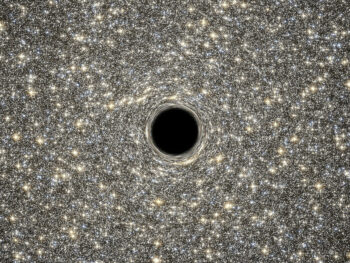
    How did supermassive black holes form?

    Posted on January 30, 2025June 25, 2025 by Ben Pauley

    An astronomer analyzed ancient supermassive black holes with mathematical models and found they likely grew exponentially after light,…

      Read More
      shadow

      Blocking this enzyme could prevent inflammation after a stroke

      Posted on January 27, 2025June 26, 2025 by Sciworthy

      Scientists reduced the impacts of a damaging immune response in mice who survived a stroke by inhibiting a common enzyme that causes…

        Read More
        Purple passionflower
        shadow

        Researchers use purple passionflower to treat herpes

        Posted on January 23, 2025June 25, 2025 by Sciworthy

        Scientists showed that a compound naturally found in purple passionflowers can alleviate symptoms of herpes simplex eye infections in mice.

          Read More
          Cow
          shadow

          Can cows transmit bird flu?

          Posted on January 20, 2025June 25, 2025 by Sciworthy

          Bird flu has plagued poultry for more than 100 years, causing the death of birds like chickens, ducks, and geese. Bird flu is caused by an…

            Read More
            Girl playing the violin
            shadow

            How aging brains recognize music

            Posted on January 16, 2025June 25, 2025 by Sciworthy

            Researchers measured brain connections during musical processing in young and old participants and found that older participants had more…

              Read More
              shadow

              Scientists use fungal networks to improve robotics

              Posted on January 13, 2025June 25, 2025 by Sciworthy

              Researchers found robots attached to a network of king oyster mushrooms interacted more closely with their environment.

                Read More
                shadow

                A new way to help Parkinson’s patients walk

                Posted on January 9, 2025June 25, 2025 by Sciworthy

                Scientists used non-invasive electrical stimulation of the vagus nerve to help patients with Parkinson’s Disease walk farther and faster.
                  Read More
                  shadow

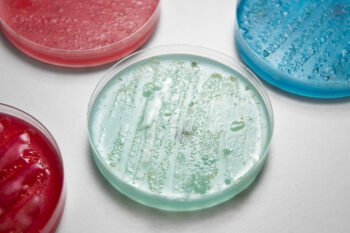
                  The future of 3D cell cultures in biomedical research

                  Posted on December 30, 2024June 26, 2025 by Sciworthy

                  Microbiologists proposed that 3-dimensional artificial environments are the best way to study cell behavior and drug responses, although…
                    Read More
                    shadow

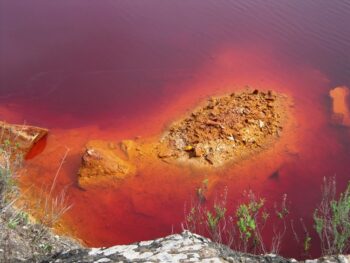
                    Viruses keep acid-loving microbes in check

                    Posted on December 23, 2024June 26, 2025 by Sciworthy

                    Researchers found viruses infect bacteria and other microorganisms in acid mine drainage and may control microbial diversity in these…

                      Read More
                      • 1
                      • …
                      • 9
                      • 10
                      • 11
                      • 12
                      • 13
                      • …
                      • 79
                      Youtube Bluesky Facebook Instagram Twitter TikTok

                      What’s New in Space Science?

                      Artist's impression of the planetary system around the red dwarf Gliese 581. Credit: ESO

                      Unlock Your Potential!

                      Unlock Your Potential!
                      shadow
                      shadow
                      shadow

                      Help us help you!

                      We want to know how Sciworthy can better serve our readers. Take our 5-minute survey and tell us your thoughts!

                      Take the Survey

                      Sciworthy’s content is Creative Commons, No Derivatives, With Attribution. Read more about the license here.