
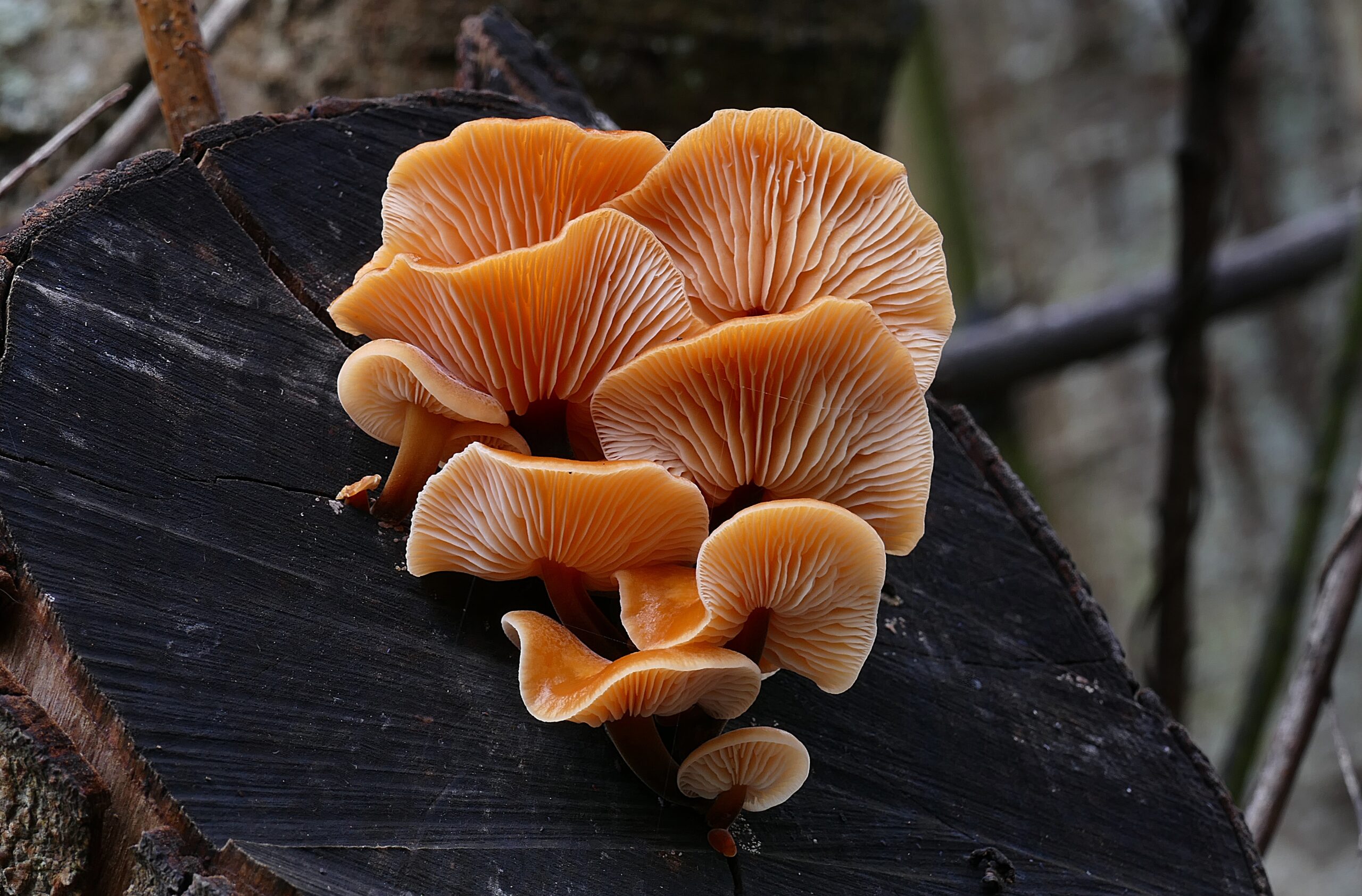

What if living fungus could power our electronics, weave our textiles, and reinvent plastic as we know it? Scientists are exploring living materials made of biologically active organisms that grow, repair, and interact with their surroundings. As nature’s recyclers, fungi are among the most versatile organisms due to their capability to colonize and proliferate on different surfaces, like decaying wood, plastics, and even rubber. These organisms are capable of growing a sturdy, root-like network called mycelium around even the most complex shapes, creating a material that can clean and heal itself.
However, creating living materials is challenging because traditional material processing techniques involve heat, chemicals, and strong mechanical forces that can harm or kill organisms. This long-standing tradeoff means that scientists must balance processability against a living organism’s adaptive abilities. Researchers at the Swiss Federal Laboratories for Materials Science and Technology (Empa) and the Institute of Food, Nutrition, and Health have developed a method that transforms mycelium into a liquid mixture of very fine fibers, known as a dispersion. This fiber dispersion can be poured, mixed, and processed using traditional techniques while maintaining its living character and biological functionality.
The researchers selected the fast-growing white-rot fungus Schizophyllum commune, specifically strain H-48a, which is known for its ability to secrete nutrients and biochemicals that can bind material and form adhesives. They grew mycelium from S. commune in liquid solutions at 30°C (86°F) for 7 days with continuous shaking, then removed it from the solution.
Growing these fungi in liquid media is tricky because they tend to clump into big, entangled chunks that form weaker materials. So to get around this, the researchers fed the mycelium into a small mill with adjustable roller gaps. They used this mill to break down the long, matted clumps into small, more uniform-sized fibers, about the width of human hair. Then they redispersed these fibers in water to form mixtures called Living Fiber Dispersions or LFDs.
The researchers used these LFDs to develop different materials. One was a substance that helps mix incompatible phases like water and oil into a mayonnaise-like emulsion. This substance is called an emulsifier, and it ensures that the mixture remains stable without re-separating over time. To test whether the LFDs could be used as biological emulsifiers, the researchers mixed them with rapeseed oil at high speeds and observed how quickly and how much the oil and water phases separated.
At concentrations of 1% and 2% LFDs, the emulsions remained stable for over 25 days and even tolerated elevated temperatures of up to 80°C (176°F). In contrast, the emulsions immediately separated at lower LFD concentrations of 0.2% and 0.3%. However, when the fungus within the emulsion was allowed to grow for another 18 days, it secreted additional stabilizing biochemicals that slowed separation by up to 4 times. This indicated that, unlike traditional plant-based emulsifiers that require purification, LFDs could function as low-energy and self-stabilizing emulsifiers relevant to food, cosmetics, and biomedicine.
The researchers also created thin films by drying the LFDs in petri dishes for 3 days. Their densely packed, thread-like fungal structures repelled water and were transparent to light, unlike most natural fiber-based materials. The team conducted mechanical tests demonstrating that these LFD films could stretch up to 10 times more than other S. commune films, and that their behavior was strongly dependent on moisture. At low humidity, the films remained rigid and brittle. But at high humidity, the rehydrated mycelium was flexible like plastic. This moisture-dependent shift acted as a built-in switch, allowing the same film to transition between brittle acrylic-like behavior and flexible plastic-like behavior, depending on the surrounding environment.
As a final step, the researchers investigated whether LFD films can serve as smart materials. They found that the films responded to changes in humidity by bending up to 90° within 5 seconds, faster and farther than comparable plant-based materials. When they placed multiple LFD films next to each other, they observed that new fiber bridges grew only along the direction of adjacent films, creating simple patterns on their own. Moreover, because fungi like these naturally colonize and degrade diverse materials, the LFD system is inherently recyclable and helps return materials to nature.
The researchers concluded that fungal-based LFD technology could be widely applied in biodegradable electronics, textiles, packaging, and soft robotics. They also suggested that genetic engineering could enable the fungus to degrade an even broader range of plastics and materials, supporting material recycling and expanding the scope of sustainable, multifunctional, bio-based materials.
