
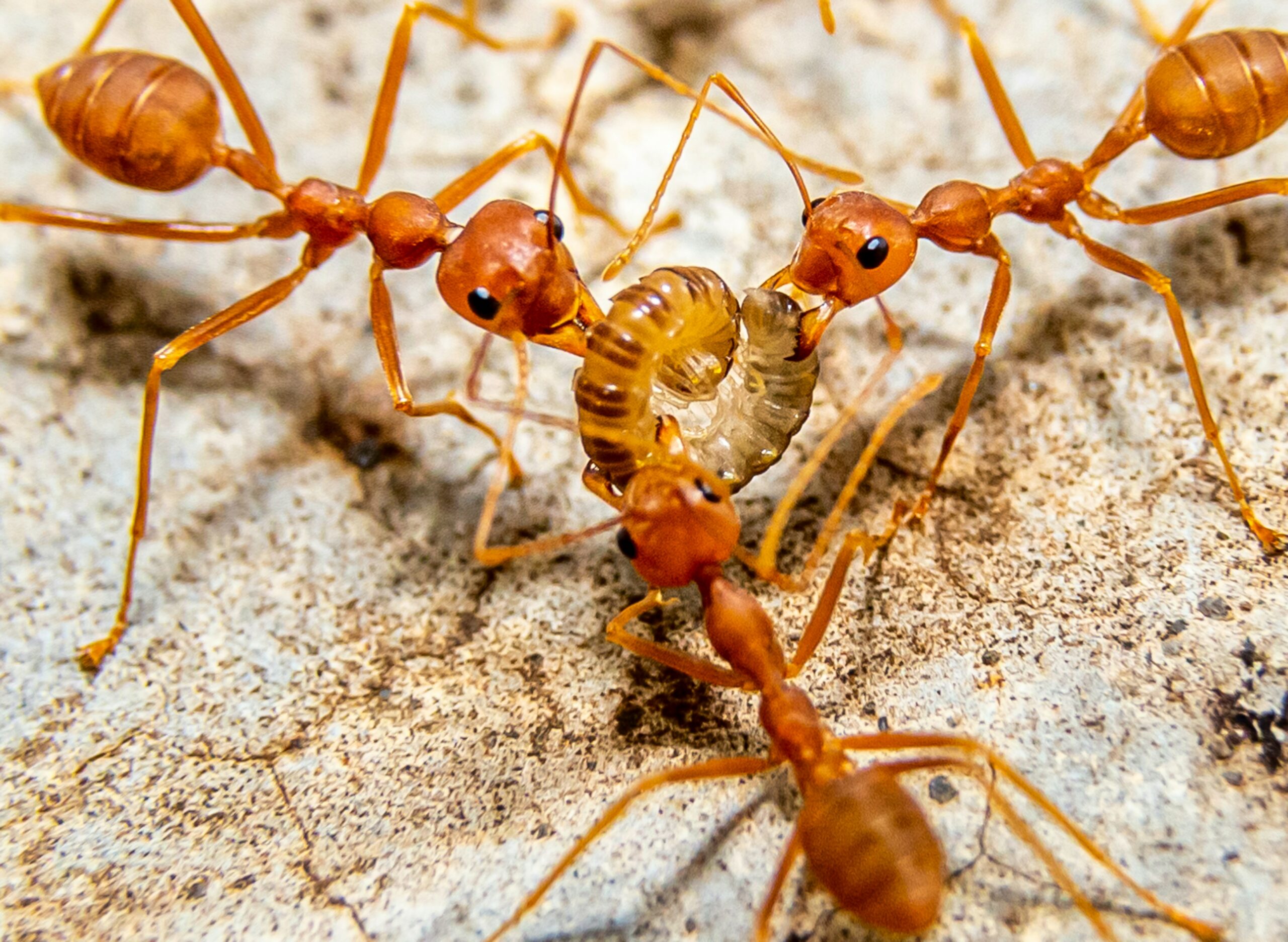

We generally assume that an organism’s offspring are of the same species. However, the species known as the European ant, Messor ibericus, doesn’t always comply. Researchers in evolutionary ecology discovered that some ants from the Messor genus seemed to be offspring of individuals of 2 different species, called hybrids.
Scientists recently conducted a study at the University of Montpellier in France, where they found that European ant queens produce workers by cloning hybrids of another ant species. This makes the European ants the first known animals to naturally produce offspring of another species, in a process called xenoparity, challenging scientists’ assumptions about reproductive biology.
Researchers analyzed the population genetics of Messor ants by looking at single DNA letters at specific points in their genome. They found that all of the European ant species’ workers are hybrids. Genetic sequencing confirmed that the workers had maternal genes from European ants and paternal genes from their close relatives, the harvester ants, or Messor structor. These species do not commonly coexist in Europe, begging the question: how are these hybrids produced when the parent species don’t overlap?
To answer this question, the scientists started by observing samples of wild European ant colonies. For 132 males from 26 colonies, the researchers observed that 44% of the males were hairy, a characteristic of European ants. The other 56% of the males appeared hairless, a characteristic of harvester ants. They analysed the shared ancestry of these ants using DNA and protein sequences, and confirmed that these physical differences occurred because the males in the colony consisted of 2 distinct species, the European ant and the harvester ant, which diverged more than 5 million years ago.
They explained that the European ant queens mate with both European ant and harvester ant males, meaning they are polyandrous. Sperm from European ant males only produce queen ants, so European ant queens must use sperm from the harvester ant species to produce the entirety of their worker caste. This makes all workers hybrid females. It implies that without the harvester ant males, the European ant would be unable to produce the workers needed to maintain their colonies.
The researchers then sequenced the part of the ants’ genomes that is exclusively inherited from the mother, known as their mitochondrial genome, to confirm that the male European ants and male harvester clones share European ant mothers. Of 286 eggs genotyped from 5 European ant laboratory colonies, scientists found that 9% of the eggs laid by the queens contained exclusively harvester ant DNA. This substantiated the notion that European ant queens can lay offspring that lack any of their own DNA. This phenomenon, whereby males are the sole source of genetic material, is called male clonality, or androgenesis.
The researchers postulated that millions of years ago, when both species regularly coexisted, European ant queens acquired the sperm from wild harvester ant colonies to produce workers. Then, when harvester ants later declined in the European ants’ habitat, the queens began storing their sperm and removing their own genetic material from the egg to directly clone their males. This strategy produced a distinct clonal lineage of harvester ant males that continues today.
The researchers demonstrated that cloned males fathered most of the hybrid workers in the colonies they observed. However, they also documented a small percentage of workers fathered by wild harvester ant males. The cloned males had much less genetic diversity than the wild males. They also looked different, like a domestic cat compared to a wild relative. In fact, the harvester ant clones lacked some hair on their bodies that their wild counterparts possessed. Due to these differences, the researchers proposed that the male clones should be considered a domesticated lineage of the harvester ant species.
While artificial cloning is not new to science, the European ant queens have naturally developed this unique adaptation to survive. Scientists have demonstrated that these queens naturally clone another species’ male, but the cellular and genetic mechanisms behind this cloning process remain unknown. The evolutionary origins of this behavior and its implications for other species are still unclear, but the French team will continue working to uncover this mystery.
For another take on this article, see here.
