
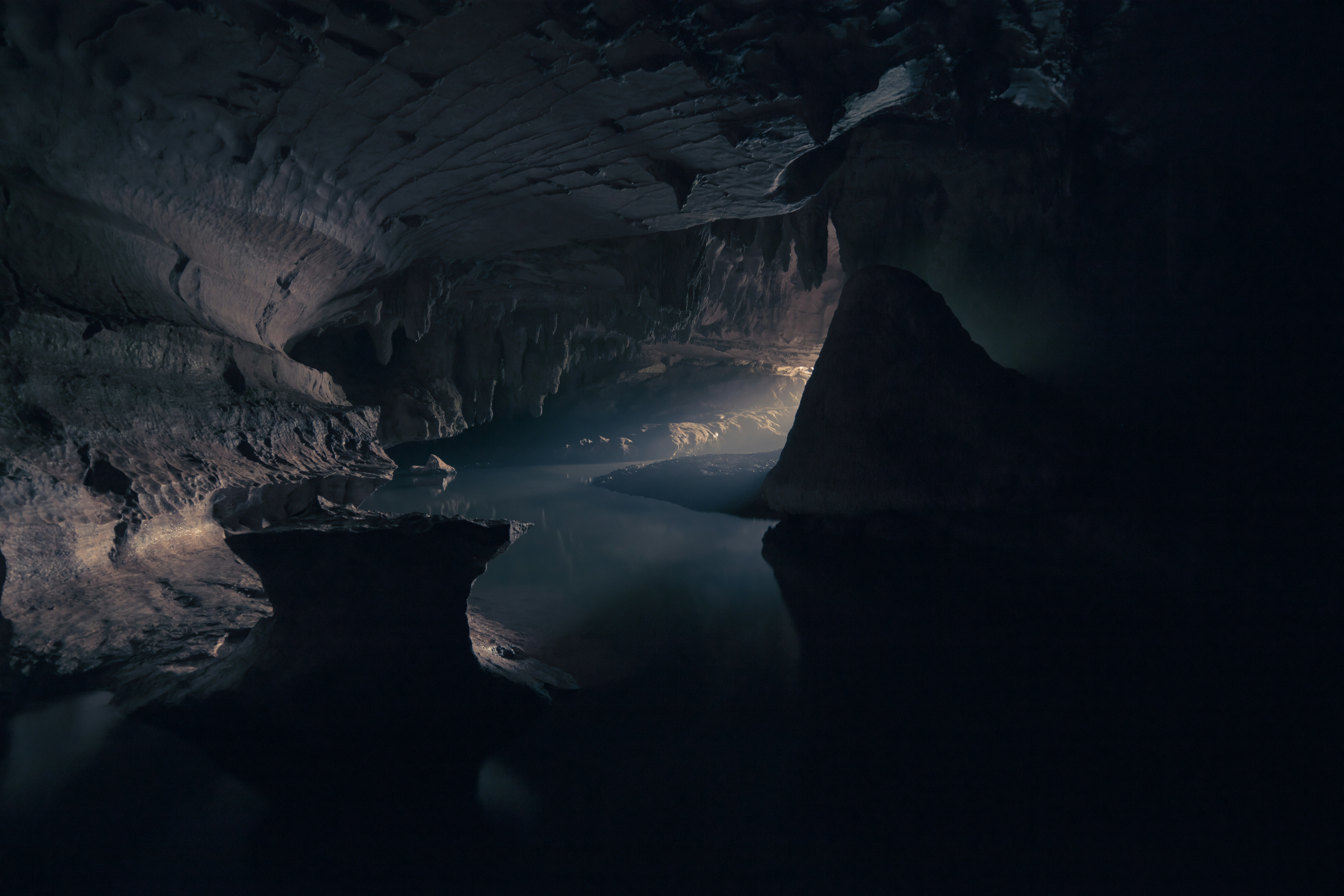

Caves are dark, humid, and isolated. They’re typically cut off from the nutrients and energy sources that power life in other ecosystems, yet they house a diverse array of bacteria and archaea. So how do these microbes get enough energy to survive? A team of researchers from Australia and Europe tackled this complex question by studying Australian caves.
Previous researchers showed that microbes in soils with limited nutrients can acquire energy from the atmosphere in the form of gases like hydrogen, carbon monoxide, and methane. These gases are present in very small amounts in the atmosphere, so they’re known as trace gases. Microbes can use these gases as energy sources because they have specific proteins that take electrons from the gas molecules, called hydrogenases, dehydrogenases, or monooxygenases. Microbes then use these electrons to power their metabolisms.
The Australia-based team hypothesized that cave-dwelling microbes could be using trace gases to survive. They tested this by visiting 4 caves in southeastern Australia. These caves were open to the atmosphere, meaning they were aerated caves. In each cave, the researchers took sediment samples at 4 points along a horizontal line extending from the cave entrance to 25 meters (about 80 feet) into the cave. They collected a total of 94 cave sediment samples.
The researchers mixed the sediment samples with specific chemicals to extract microbial DNA. They used this DNA to identify the microbes and the number of each species in the sediments. They found diverse groups of microbes throughout the caves, including Actinobacteriota, Proteobacteria, Acidobacteria, Chloroflexota, and Thermoproteota. They also found that microbial diversity and abundance were higher near the cave entrance, with 3 times as many microbes living near the entrance as in the interior.
The team further analyzed the microbial DNA from their samples using genetic sequencing to find genes related to trace gas consumption. They found that 54% of cave microbes possessed genes that encode for proteins used in trace gas consumption, including hydrogenase, dehydrogenase, and monooxygenase.
To determine whether their results could be extrapolated to most cave environments, the researchers examined published microbial data from 12 other aerated caves around the world. They found that the genes for trace gas consumption were similarly widespread in other cave microbes. The team concluded that atmospheric trace gases could support a large portion of microbial life and activity in caves.
Next, the team analyzed gases in the caves. In each cave, they set up plastic chambers with syringes, called static flux chambers. They used these chambers to collect 25 milliliters (about 1 ounce) of atmospheric gas at the 4 points along the sampling line. They measured the concentrations of hydrogen, carbon monoxide, and methane in each sample with a machine that heats the gases to separate them, called a gas chromatograph. They found that the concentrations of all 3 gases were about 4 times greater near the cave entrance than in the cave interior. The team suggested that trace gas concentrations were lower in the cave interior because microbes were consuming these gases for energy.
They further tested their results by constructing static flux chambers in their laboratory with sediments collected from the caves. They incubated the sediments with molecular hydrogen, carbon monoxide, and methane at concentrations similar to the natural cave atmosphere. They found that the microbes in the experimental chambers also consumed the atmospheric trace gases.
Finally, the team investigated how the cave microbes got their organic matter. To do this, they analyzed their carbon atoms. Atoms of the same element that have different masses are known as isotopes. Carbon has 2 stable isotopes, the lighter carbon-12 and the heavier carbon-13. Different metabolic processes yield unique ratios of carbon-12 to carbon-13 in microbial carbon, so scientists can determine where their carbon came from by measuring carbon isotope ratios in their biomass. Using a machine called an isotope ratio mass spectrometer, the researchers found that the cave microbes had less carbon-13 than carbon-12, suggesting that they produced carbon inside the caves using trace gases.
The research team concluded that atmospheric trace gases are crucial energy sources for cave-dwelling microbes and support a diverse microbial population. Having made this discovery, they suggested that future researchers investigate how climate shifts, including variations in temperature and rainfall, impact how microbes utilize atmospheric trace gases in cave environments.
