

Skip to content
  • Home
  • About Us
    • Our Mission
    • People
    • Contact
    • Write for Us
  • Topics
    • Agriculture
    • Astrobiology & Space Science
    • Astronomy
    • Biology
    • Chemistry
    • Computer Science
    • Earth Systems
    • Ecology
    • Education
    • Engineering
    • Environment
    • Geology
    • Machine learning and AI
    • Materials Science
    • Medicine
    • Microbiology
    • Neuroscience
    • Oceanography
    • Paleobiology
    • Physics
    • Sustainability
    • Technology
    • Technosignatures
    • The Force
    • Zoology
  • Big Questions
    • How can microbes clean up the environment?
    • How can science help ensure a sustainable future?
    • How could humans travel in space?
    • How do computers learn?
    • How do microbes respond to changes in their surroundings?
    • How does the environment respond to humans?
    • How do scientists study drugs and vaccines?
    • How do we treat infectious diseases?
    • How does the brain work?
    • How do scientists use nanotechnology?
    • How does technology impact our daily lives?
    • How do we educate our kids?
    • How do we feed people now and in the future?
  • Newsletter
  • Take Our Courses
  • Professor Partnership Program
    • About the Program
    • All PPP Articles
    • New Mexico Tech
    • Raritan Valley CC Biology
    • RWU and Tufts Cancer Biology
    • Swarthmore College Micro-Internship
    • Trinity Geology
    • University of Delaware
  • Support Us
Skip to content

Sciworthy

Sciworthy

The Encyclopedia of Science's Frontier

Category: How does the environment respond to humans?

shadow

Future telescopes could search for alien farms

Posted on April 12, 2022June 25, 2025 by Jacob Haqq Misra

Simulations suggest that the light observed from a distant planet around another star might be able to show evidence of ammonia and nitrous…
    Read More
    shadow

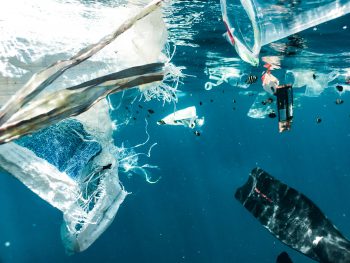
    Fish behavior is affected by microplastics in water

    Posted on April 7, 2022October 24, 2022 by Erica Curles

    Microplastics and nanoplastics affect gut bacteria and neurotransmitter levels in discus fish, potentially explaining changes in fish…
      Read More
      shadow

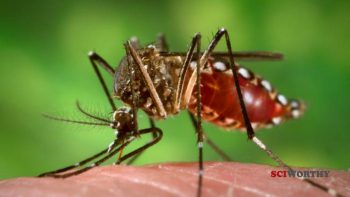
      Mosquitos are more common in poorly kept-up neighborhoods

      Posted on October 28, 2021October 24, 2022 by Sciworthy

      The team concluded, based on their data, that socioeconomic status is related to Aedes aegypti abundance within Puerto Rico’s urban…

        Read More
        shadow

        Stem cells may be the key to saving white rhinos from extinction

        Posted on September 29, 2021October 24, 2022 by Sciworthy

        Could stem cells help us grow new rhinos? See how scientists at San Diego Zoo Global and Scripps Research are making new strides in…
          Read More
          shadow

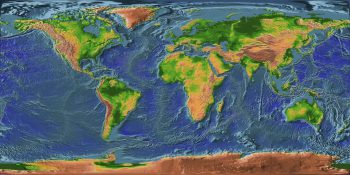
          The shape of the continents is not a coincidence

          Posted on September 13, 2021June 24, 2025 by Sciworthy

          Biological processes might have led to greater continental crust coverage than would be expected on a planet without life.

            Read More
            shadow

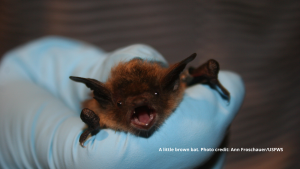
            Hawaiian caves invaded by rats

            Posted on August 19, 2021June 24, 2025 by Sciworthy

            Rattus rattus, commonly known as the black rat or house rat has been recognized as “one of the most invasive species worldwide”. These…
              Read More
              shadow

              Small animals that carry disease adapt well to our activities

              Posted on February 11, 2021June 13, 2025 by Sciworthy

              A study suggests that small mammals like rodents have adapted to thrive on human-influenced land. They also happen to carry a lot of human…

                Read More
                • 1
                • 2
                • 3
                Youtube Bluesky Facebook Instagram Twitter TikTok

                What’s New in Space Science?

                Artist's impression of the planetary system around the red dwarf Gliese 581. Credit: ESO

                Unlock Your Potential!

                Unlock Your Potential!
                shadow
                shadow
                shadow

                Help us help you!

                We want to know how Sciworthy can better serve our readers. Take our 5-minute survey and tell us your thoughts!

                Take the Survey

                Sciworthy’s content is Creative Commons, No Derivatives, With Attribution. Read more about the license here.