

Skip to content
  • Home
  • About Us
    • Our Mission
    • People
    • Contact
    • Write for Us
  • Topics
    • Agriculture
    • Astrobiology & Space Science
    • Astronomy
    • Biology
    • Chemistry
    • Computer Science
    • Earth Systems
    • Ecology
    • Education
    • Engineering
    • Environment
    • Geology
    • Machine learning and AI
    • Materials Science
    • Medicine
    • Microbiology
    • Neuroscience
    • Oceanography
    • Paleobiology
    • Physics
    • Sustainability
    • Technology
    • Technosignatures
    • The Force
    • Zoology
  • Big Questions
    • How can microbes clean up the environment?
    • How can science help ensure a sustainable future?
    • How could humans travel in space?
    • How do computers learn?
    • How do microbes respond to changes in their surroundings?
    • How does the environment respond to humans?
    • How do scientists study drugs and vaccines?
    • How do we treat infectious diseases?
    • How does the brain work?
    • How do scientists use nanotechnology?
    • How does technology impact our daily lives?
    • How do we educate our kids?
    • How do we feed people now and in the future?
  • Newsletter
  • Take Our Courses
  • Professor Partnership Program
    • About the Program
    • All PPP Articles
    • New Mexico Tech
    • Raritan Valley CC Biology
    • RWU and Tufts Cancer Biology
    • Swarthmore College Micro-Internship
    • Trinity Geology
    • University of Delaware
  • Support Us
Skip to content

Sciworthy

Sciworthy

The Encyclopedia of Science's Frontier

Category: Big Questions

shadow

The fate of massive rotating stars

Posted on December 15, 2025December 15, 2025 by Ben Pauley

Researchers showed that massive stars at the end of their lives are more likely to collapse into black holes than to explode into…
    Read More
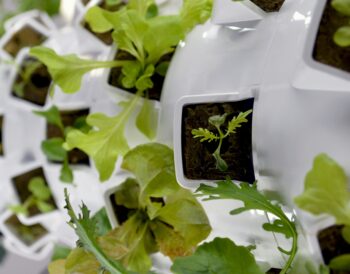
    Hydroponic plants growing
    shadow

    Metal-tolerant plants could change the future of mining

    Posted on December 8, 2025November 19, 2025 by Madeline Taylor

    Researchers demonstrated that some plant species store high amounts of nickel in their biomass, making them good candidates for metal…
      Read More
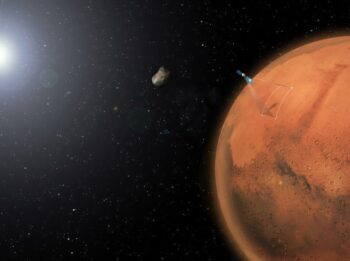
      This artist's impression shows ESA’s Mars Express spacecraft scanning the fast-moving shadow of the moon Phobos as it moved across the Martian surface.
      shadow

      How did Mars get its moons?

      Posted on December 1, 2025December 1, 2025 by Ben Pauley

      Astronomers calculated possible trajectories for small objects approaching Mars. They found that as many as 1 in 50 get captured in orbit,…
        Read More
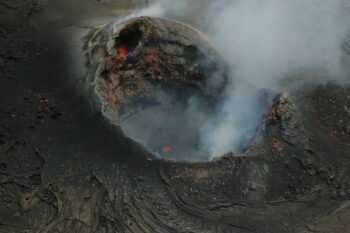
        Volcanic vent, Mauna Loa
        shadow

        Lava tubes contain unknown “microbial dark matter”

        Posted on November 27, 2025November 28, 2025 by Sciworthy

        Researchers discovered lava tubes on Mauna Loa containing previously unknown microorganisms with metabolisms and communities that could…

          Read More
          shadow

          Astronomers model early star clusters

          Posted on November 17, 2025November 3, 2025 by Ben Pauley

          Scientists used computer simulations to determine how ancient star clusters formed. Their results were similar to real clusters found with…

            Read More
            A Detailed Close-Up of a Colorful Mosaic Wall Made From Recycled Materials - A close-up shot of a colorful mosaic wall created from recycled materials. The wall is composed of various pieces of metal, fabric, and other materials, all stitched together to form a complex and intricate pattern. The colors are bright and vibrant, creating a visually stunning and textured surface.
            shadow

            Reinventing fabric coatings from textile waste

            Posted on November 13, 2025January 7, 2026 by Erin Faye Dizon

            Scientists developed a sustainable way to upcycle discarded polyester and spandex fabrics into durable, toxin-free coatings using…
              Read More
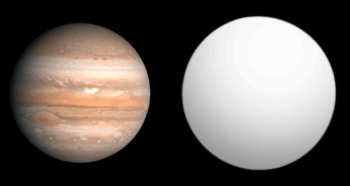
              Comparison of exoplanet TrES-1 b with Jupiter
              shadow

              Scientists observe a changing exoplanet orbit

              Posted on November 10, 2025October 29, 2025 by Ben Pauley

              Astronomers conducted a multifaceted study of the exoplanet TrES-1 b and found that its orbit is shifting, possibly due to an unseen…

                Read More
                Top view of plastic bottles with flowers
                shadow

                Do microbes prefer biodegradable plastic?

                Posted on November 3, 2025October 31, 2025 by Madeline Taylor

                Researchers found that microbes living on biodegradable plastics have more genes for plastic degradation than those living on traditional…

                  Read More
                  shadow

                  How did early galaxies form?

                  Posted on October 27, 2025October 16, 2025 by Ben Pauley

                  Astronomers observed a distant, ancient galaxy and found that it consisted of 5 distinct regions, suggesting a complex formation history…

                    Read More
                    shadow

                    3D-printed spinal cord organoids aid spinal recovery in rats

                    Posted on October 23, 2025October 16, 2025 by Amruta Tendolkar

                    Scientists grew miniature spinal cords from stem cells and implanted them into rats with spinal cord injuries. The cells formed functional…

                      Read More
                      • 1
                      • 2
                      • 3
                      • 4
                      • 5
                      • 6
                      • …
                      • 79
                      Youtube Bluesky Facebook Instagram Twitter TikTok

                      What’s New in Space Science?

                      Artist's impression of the planetary system around the red dwarf Gliese 581. Credit: ESO

                      Unlock Your Potential!

                      Unlock Your Potential!
                      shadow
                      shadow
                      shadow

                      Help us help you!

                      We want to know how Sciworthy can better serve our readers. Take our 5-minute survey and tell us your thoughts!

                      Take the Survey

                      Sciworthy’s content is Creative Commons, No Derivatives, With Attribution. Read more about the license here.